Where to See the Northern Lights in Tromso and Norway
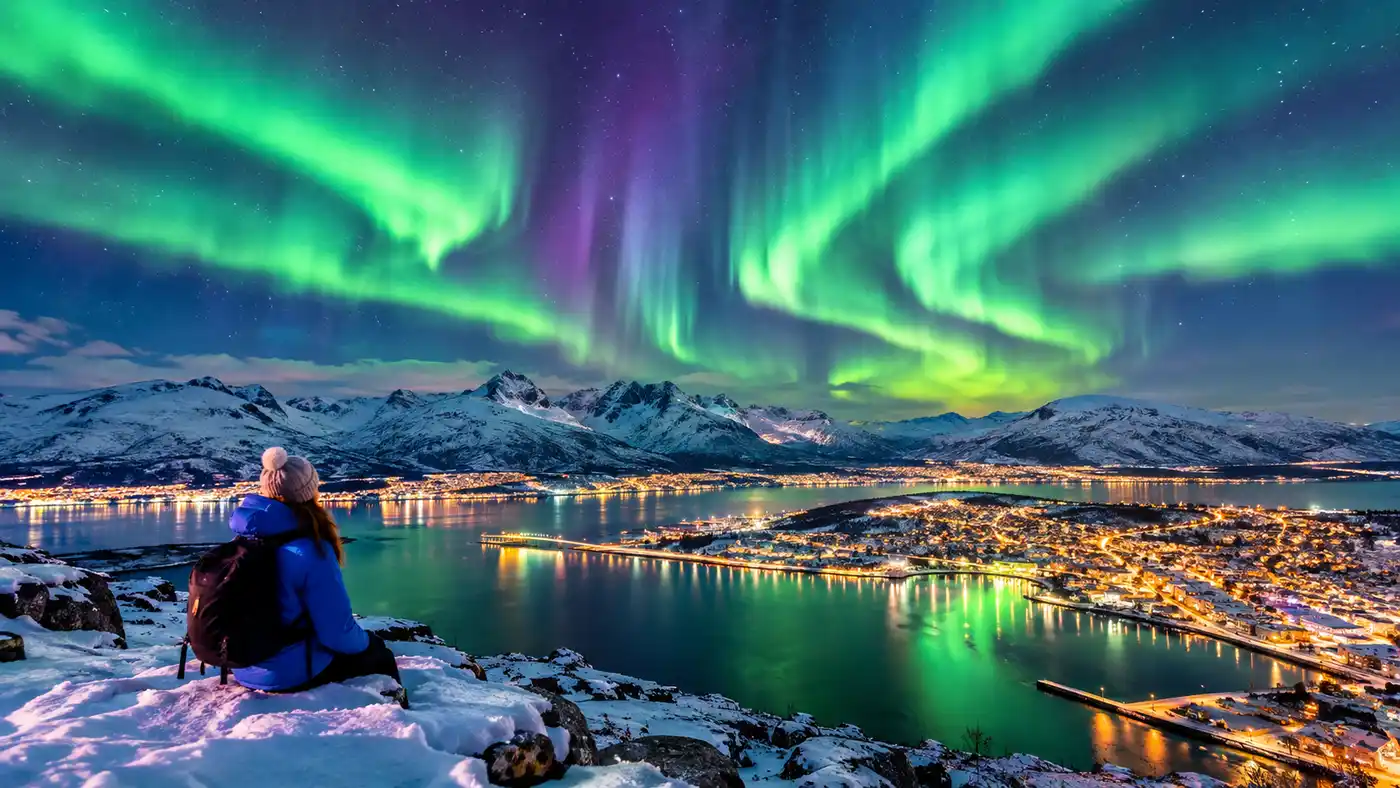
Standing on the frozen shore of Prestvannet lake at midnight, the wind bites right through your gloves. You stare north over dark birch trees, watching a faint gray smudge slowly brighten, sharpen, and then twist into an electric green ribbon across the stars. Finding where to see northern lights in tromso does not require hiring a helicopter or spending thousands of kroner on remote wilderness lodges. Sometimes, it is as simple as taking a twenty-minute stroll up the hill behind your hotel.
Norway is one of the best patches of earth on the planet for chasing the aurora borealis. The mainland curves right under the auroral oval, bathed in the warmth of the Gulf Stream, which keeps coastal temperatures surprisingly bearable compared to Siberia or inland Canada. Still, weather in the Arctic is fickle. Knowing where to go in Norway to see the northern lights depends on microclimates, light pollution, mountain topography, and whether you have your own set of studded wheels.
Book your aurora borealis tour tromso experience:
Top Aurora Spots Right in Tromso City
Most visitors arrive without a rental car and assume they are stranded in a soup of streetlamps. Tromsø is an island city of about 77,000 residents, so downtown does produce light glare. Walk fifteen or twenty minutes away from the pedestrian strip of Storgata, though, and the darkness opens up fast.
Prestvannet lake sits at the highest point of the central island ridge. It is an easy walk from downtown, though the uphill trek will warm you up quickly in sub-zero air. The lake is surrounded by a wooded nature reserve with unlit walking paths. Local dog walkers gather here around 8 PM, waiting for the sky to clear. You will get a clear view looking north toward the peaks of Kvaløya. Reflections of green fire on the early winter ice can be stunning before deep snow blankets the frozen surface in January.
Pro tip: Take local bus 40 or 42 straight to Telegrafbukta after 9 PM. You can wait inside the heated glass shelter by the bus loop until your eyes adjust to the darkness.
Telegrafbukta sits at the southern tip of the island, facing south and southwest across the Balsfjorden. A city park with open lawns and a gravel beach, it puts the bulk of Tromsø's urban glow behind you. It is a fantastic spot if a geomagnetic storm sends the aurora overhead or pushing south toward the mainland. On quiet nights with low solar activity, you might miss weaker displays because the northern horizon is partially blocked by the island itself.
Then there is Mount Storsteinen. The Fjellheisen cable car takes you up 421 meters in roughly four minutes. The viewing terrace directly outside the upper station gives you that postcard panorama of Tromsø bridge and the glowing city grid. For dark skies, do not linger on the main terrace. Walk ten minutes out into the open plateau behind the restaurant. The city lights drop out of view below the cliff edge, leaving you alone under the Arctic sky.
Escaping City Glare: Prime Spots on Kvaloya and Beyond
Kvaløya, or Whale Island, lies just across the Sandnessund Bridge to the west of Tromsø. It is a wilderness playground of jagged granite peaks, narrow fjords, and tiny fishing hamlets. If you want pristine dark skies without driving two hours inland, this is where to watch northern lights in Norway.
Ersfjordbotn is an absolute favorite. The road winds down into a deep, steep-sided fjord pointing northwest straight toward the open Arctic Ocean. Standing at the water's edge, towering black walls of rock flank you on both sides, creating a natural frame for the green bands overhead. It takes roughly 25 minutes to drive here from Tromsø. A small parking area near the local community center fills up quickly on clear winter evenings.
Keep driving west through the mountain passes and you reach Sommarøy, an island community roughly 55 kilometers out. Connected by high arching bridges, Sommarøy features white coral beaches and wide views of the open Norwegian Sea. There is practically zero light interference looking north. If you want to know how the coastal scenery compares to other destinations, checking out the best time to see the northern lights in Tromso will help you align your trip with the clearest seasonal windows.
Note: Winter roads on Kvaløya frequently glaze over with black ice when temperatures hover near zero. If you rent a car, confirm it has studded tires (piggdekk) rather than friction winter tires.
Kattfjordeidet is an inland mountain pass bisecting the island. It feels wild, remote, and forbidding. Snowdrifts here can reach three meters deep by February. There are a handful of plowed laybys along route 862 where you can safely pull over. Turn off your car headlights, step outside into absolute silence, and let the sheer scale of the Arctic wash over you. If navigating these narrow, icy mountain corridors in the pitch dark makes you nervous, booking guided Tromso northern lights tours allows seasoned local drivers to handle the drifting snow while you watch the sky.
Where in Norway to See Northern Lights: Tromso vs Other Regions
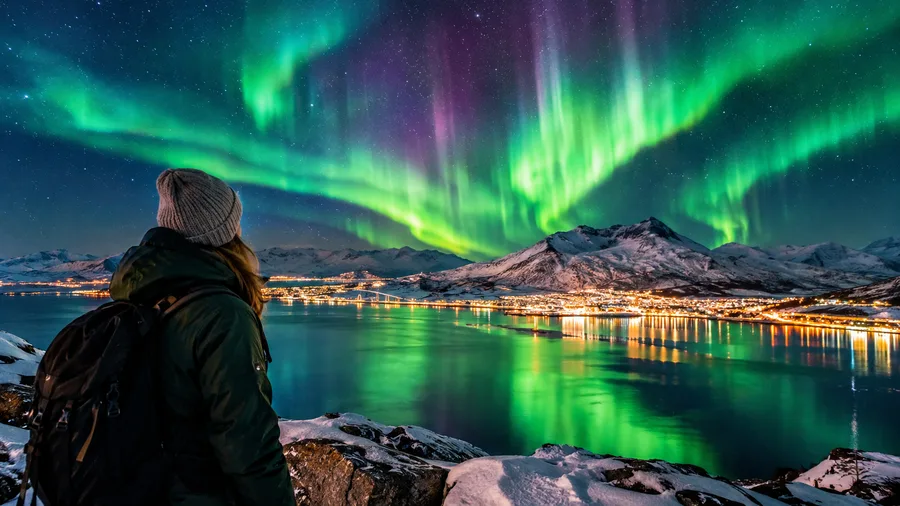
Travelers constantly ask whether Tromsø is the undisputed best place to view northern lights in Norway. The honest answer? It depends on what you want out of the landscape. Northern Norway stretches hundreds of kilometers along dramatic coastlines and barren inland plateaus. Each spot carries trade-offs between scenery, weather stability, and accessibility.
Alta sits northeast of Tromsø in Finnmark county. It lacks the steep, jagged alpine peaks of the coast, but it has one massive advantage: dry, stable weather. Alta rests inside an inland basin that sees far fewer coastal storms than Tromsø. It is home to the world's first northern lights observatory, built on Mount Haldde in 1899. If clear skies are your sole priority and you care less about dramatic mountain backdrops, Alta is a brilliant alternative.
The Lofoten Islands, further south, offer scenery that feels unreal. Granite spires shoot straight out of the ocean, framing red fishing cabins (rorbuer) along churning surf. Because Lofoten sits slightly south of the Arctic Circle, geomagnetic storms need to be slightly stronger for northern lights viewing Norway there compared to Tromsø. Winter weather in Lofoten is also intensely maritime, meaning rain, sleet, and howling gales can pin you indoors for days.
Senja is often called "Norway in miniature." Located between Tromsø and Lofoten, Senja has the dramatic razor peaks of the Segla ridge without the heavy tour bus traffic. It is quiet, raw, and delightfully empty in January. For adventurers who want complete isolation while watching the aurora tromso norway travelers dream of, Senja delivers in spades.
| Destination | Latitude | Cloud Cover Risk | Landscape Character | Accessibility |
|---|---|---|---|---|
| Tromsø | 69.6° N | Moderate | Fjords, islands, accessible peaks | Direct international flights |
| Alta | 69.9° N | Low to Moderate | Pine forests, rolling tundra, river canyon | Domestic flights via Oslo |
| Lofoten Islands | 68.2° N | High | Vertical sea cliffs, surf beaches | Ferry, rental car, or regional prop planes |
| Senja | 69.3° N | Moderate to High | Jagged sea crags, deep ocean fjords | 2.5-hour drive or seasonal ferry from Tromsø |
| Kirkenes | 69.7° N | Low (very cold) | Birch forest, frozen lakes, Russian borderlands | Domestic flights via Oslo |
Book your aurora borealis tour tromso experience:
The Inland Weather Havens: Beating the Coastal Clouds
Can you see northern lights in Norway when the coastal forecast shows thick clouds and sleet? Yes, you can. You just have to drive east. This is the secret local guides rely on every single night from October through March.
The high mountain barrier of the Lyngen Alps splits northern Norway's weather systems right down the middle. Coastal storms slam into the peaks and dump moisture over Tromsø and the outer islands. East of the mountains, dry continental air pushes up from Sweden and Finland. The difference can be shocking. You might leave Tromsø in a miserable blizzard and drive ninety minutes inland to find bone-dry asphalt and a million stars.
- Skibotn valley: Often called the "blue hole" of the north, this valley sits in a deep rain shadow behind the Lyngen peninsula. It features a dedicated astrophysical observatory precisely because it gets so many cloudless nights.
- Signaldalen: A quiet farm valley south of Skibotn, dominated by the imposing wedge of Otertinden peak. The valley floor is sheltered from ocean storms, giving you dark skies and striking mountain silhouettes.
- Overbygd and Tamokdalen: Inland wilderness areas south of the Balsfjord. Temperatures here easily plunge to minus 25 Celsius, but the dry inland air often remains crisp and cloud-free while the coast is socked in.
- Kilpisjärvi border region: If the cloud bank stretches across the entire county, chase guides push 160 kilometers southeast across the border into Finnish Lapland, where flat tundra offers uninterrupted views under stable continental air masses.
Driving inland takes commitment and stamina. You are looking at three to five hours in a car round trip. But when the skies light up with emerald waves over a frozen riverbed, you will not care about the cold or the kilometers.
Essential Tips for Catching the Aurora Borealis in Norway
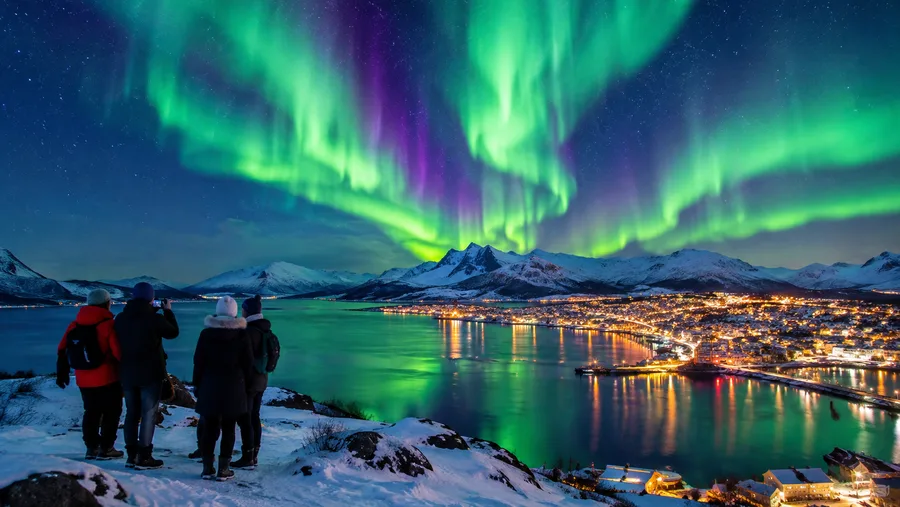
Chasing the lights requires patience. The aurora does not switch on like a lamp at 8 PM and stay lit until dawn. It pulses, surges, fades into a pale mist, and bursts into violent activity for twelve minutes before vanishing for two hours. Staying warm and managing your expectations is half the battle.
- Dress for stationary cold: Standing on frozen ground at minus ten degrees drains body heat through your boot soles within thirty minutes. Wear real wool socks, insulated winter boots with thick rubber soles, and thermal base layers made of pure merino. Skip cotton entirely.
- Track real solar data: Do not rely exclusively on the generic "Kp index" seen on tourist brochures. Download space weather apps that show real-time solar wind speed and the interplanetary magnetic field (IMF) orientation. When the Bz component points sharply south (negative), the gates open and Tromsø norway aurora displays explode overhead.
- Check satellite radar loops: A northern lights tracker tromso visitors consult is useful, but the Norwegian meteorological site (yr.no) radar loop is your best friend. Look at high cloud versus low cloud cover. Low clouds will ruin your night, while thin high cirrus clouds often let strong auroral ribbons shine straight through.
- Give yourself four nights minimum: If you stay two nights, bad weather can easily shut you out completely. Over four or five nights in northern Norway, your mathematical probability of catching at least one clear window climbs above 85 percent.
I think too many people spend their time staring at camera screens instead of looking up. Take your photos, lock the tripod down on an interval timer, and then put your hands back in your pockets. Watching the green pillars ripple across the zenith with your own eyes is the whole point of making the journey.
Frequently Asked Questions about where to see northern lights in tromso
Can you see the northern lights in Tromso without booking a tour?
Yes, absolutely. Walking twenty minutes out of downtown to Prestvannet lake or Telegrafbukta beach gives you dark enough conditions to see active displays. The main reason to book a chase tour is mobility. A guide can drive two hours inland to Skibotn or Finland to escape coastal cloud cover if the city sky is overcast.
Where can you see the northern lights in Norway if Tromso is cloudy?
The inland valleys behind the Lyngen Alps, specifically Skibotn, Signaldalen, and the Tamok Valley, are the primary weather refuges. These areas sit in a rain shadow and frequently stay clear when coastal Tromsø is trapped under thick marine fog, snow, or rain.
How does Tromso vs Iceland compare for northern lights viewing?
Tromsø sits roughly five degrees of latitude further north than Reykjavik, placing it directly under the center of the auroral oval. This means Tromsø sees lights during weaker solar conditions. Iceland has wilder volcanic terrain, but Tromsø offers better coastal weather protection due to deep fjords and easier inland escape routes when storms roll through.
Can you see the northern lights in Norway from a cruise ship?
You can, especially on coastal voyages like Havila or Hurtigruten along the northern coastline between Bodø and Kirkenes. The open sea has zero light pollution. The only drawback is ship vibration and rolling motion, which makes long-exposure tripod photography difficult compared to standing on solid ground.
Quick Reference
- Best city spot: Prestvannet Lake (20-min walk from downtown)
- Best scenic fjord spot: Ersfjordbotn (25-min drive west)
- Best weather refuge: Skibotn valley (90-min drive inland)
- Peak viewing window: 9 PM to 2 AM, October through March
Book your aurora borealis tour tromso experience:
The Bottom Line
You do not need luck to see the aurora in Tromsø, but you do need flexibility. If you stand on your hotel balcony waiting for neon ribbons to appear above the neon streetlights, you will probably leave disappointed. Put on your wool layers, walk away from the harborside pubs, and head for the dark shorelines of Kvaløya or the quiet paths of Prestvannet. When the solar wind catches the upper atmosphere and the sky turns violet and green, you will realize why travelers have been journeying to this frozen fringe of Norway for centuries.
Read more about aurora borealis tour tromso.