Best Time to See the Northern Lights in Tromso
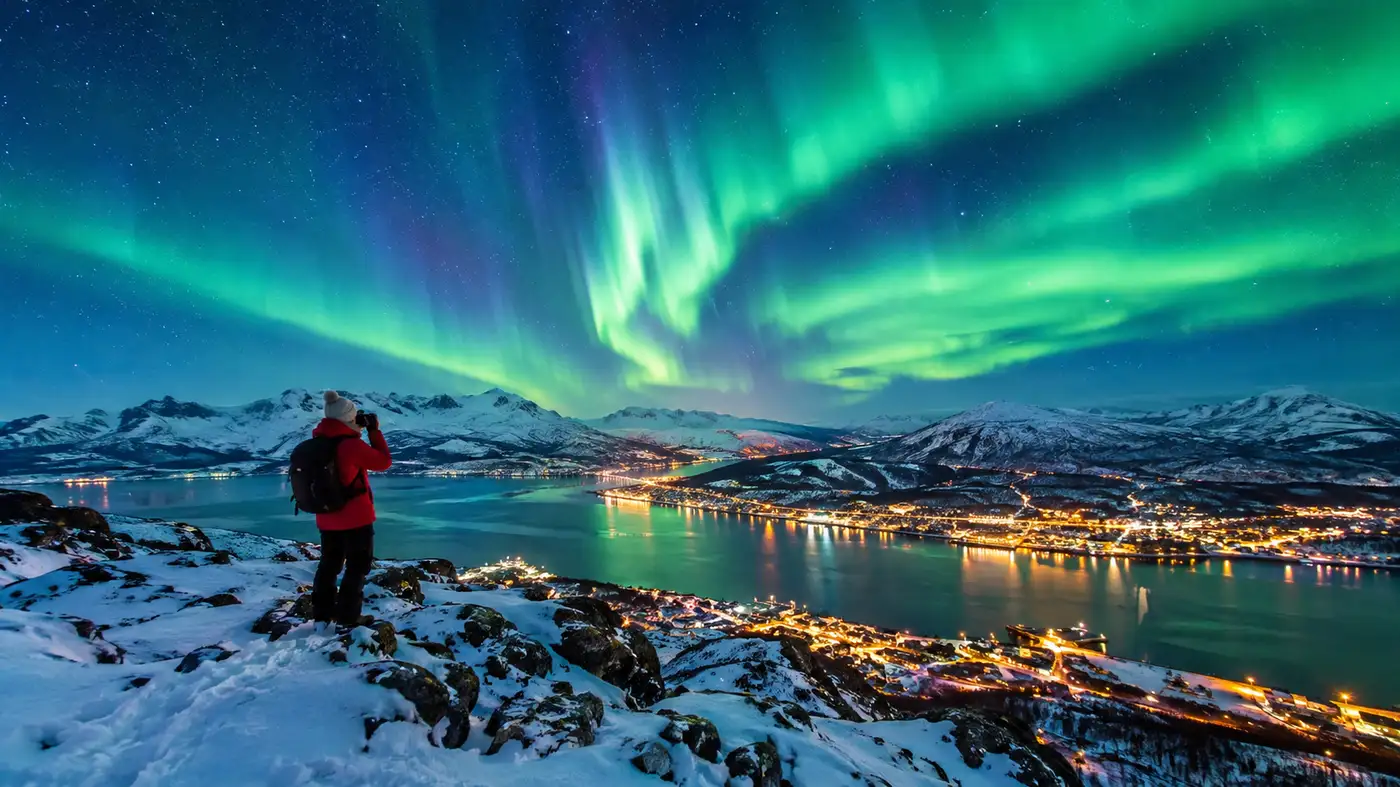
My fingers were numb around a lukewarm thermos of black coffee when the sky over Ersfjordbotn finally split open. A ribbon of pale green light started creeping along the mountain crest, then flared into violet ripples that drifted overhead for nearly two hours. If you are planning a trip to northern Norway, finding the best time to see northern lights in tromso is the single biggest choice you will make. Pick the wrong week and you might spend five days staring up at dense gray clouds in freezing drizzle.
A lot of travelers arrive believing the common myth that extreme cold magically pulls auroras out of the sky. In reality, the solar particles causing this phenomenon hit our upper atmosphere around eighty miles up, entirely unbothered by whether the ground is frozen solid or wet with rain. What actually determines your success is darkness, cloud cover, and solar activity. The overall aurora borealis season norway offers stretches for over seven months, yet each phase of that window has distinct weather quirks, road conditions, and daylight levels that will shape your trip.
Book your aurora borealis tour tromso experience:
Month-by-Month Guide: Best Time to See Northern Lights in Tromso Norway
Darkness returns to the Arctic in late August. By early September, the sun sets properly again, which officially opens the northern lights season in norway. Early autumn is deeply underrated by visitors. The fjords have not frozen over, the birch forests on Kvaløya turn a rich golden yellow, and lakes remain mirror-smooth. Seeing the green glow reflect across open salt water is something you simply cannot experience once winter ice locks the shoreline in December.
Heading into late autumn, the story changes. Norway in october northern lights hunts are great for solar activity, but coastal storms love to roll in off the Atlantic during this month. November transitions into the Polar Night, which begins around November 27. The sun drops below the horizon and stays hidden until mid-January. Darkness reigns for over twenty hours a day, giving you massive time windows to catch displays, though coastal blizzards become a frequent reality.
From late January through March, winter hits its stride. Snow covers everything, stabilizing the temperatures and creating crisp, clear inland air. Many seasoned guides will tell you that the best time to see northern lights in tromso norway is March. The days offer four to six hours of soft blue and pastel light for snowmobiling or skiing, while nights bring cold, settled skies and dependable solar action around the spring equinox.
| Month | Darkness Hours | Average Temp (°C) | Snow Cover | Aurora Potential |
|---|---|---|---|---|
| September | 6 to 9 hrs | +6°C | None (Autumn foliage) | High (Equinox effect) |
| October | 10 to 14 hrs | +2°C | Patchy on peaks | Moderate to High (Cloudy) |
| November | 15 to 20 hrs | -1°C | Building snowpack | Good (Long dark nights) |
| December | 24 hrs (Polar Night) | -3°C | Full snow cover | Good (Cloud risks apply) |
| January | 20 to 24 hrs | -4°C | Heavy deep snow | High (Cold, clear inland) |
| February | 13 to 17 hrs | -4°C | Deep winter snow | Very High (Stable weather) |
| March | 10 to 13 hrs | -2°C | Solid snowpack | Exceptional (Equinox effect) |
Pro tip: Aim your visit near the equinoxes in late September or mid-to-late March. The Russell-McPherron effect tilts Earth's magnetic field directly into the incoming solar wind, sparking significantly more intense geomagnetic storms.
The Solar Maximum: Best Time to See Northern Lights in Norway 2025 to 2027
Right now we are in the middle of Solar Cycle 25. Every eleven years or so, the sun's magnetic poles flip, creating an era of intense solar flares, sunspots, and coronal mass ejections. Scientists originally projected the peak for 2024, but revised data shows this plateau extending through northern lights norway 2025 and well into northern lights in norway 2026.
What does this mean on the ground? You do not need a monster geomagnetic storm to see brilliant colors. Even weak solar winds colliding with our atmosphere produce vivid green coronas and fast-dancing curtains right now. If you are debating between going for northern lights in norway 2025 or holding off, do not wait. The best time to see northern lights in norway 2025 is happening through the winter months right in front of us, with 2026 holding similar promise before activity slowly wanes toward the best time to see northern lights in norway 2027.
I watched an auroral burst near Sommarøy last season during a baseline solar storm that would have been a faint smudge five years ago. Instead, it lit up the white sand beaches with electric green and pink edges. High solar output gives you a massive safety margin against marginal viewing conditions.
Solar cycles do not eliminate local clouds. A massive solar explosion means nothing if you have two miles of damp maritime stratus hanging over your head. That is why planning your trip around local weather patterns matters far more than obsessing over daily geomagnetic predictions.
Daily Timing: When Can You See the Northern Lights in Norway?
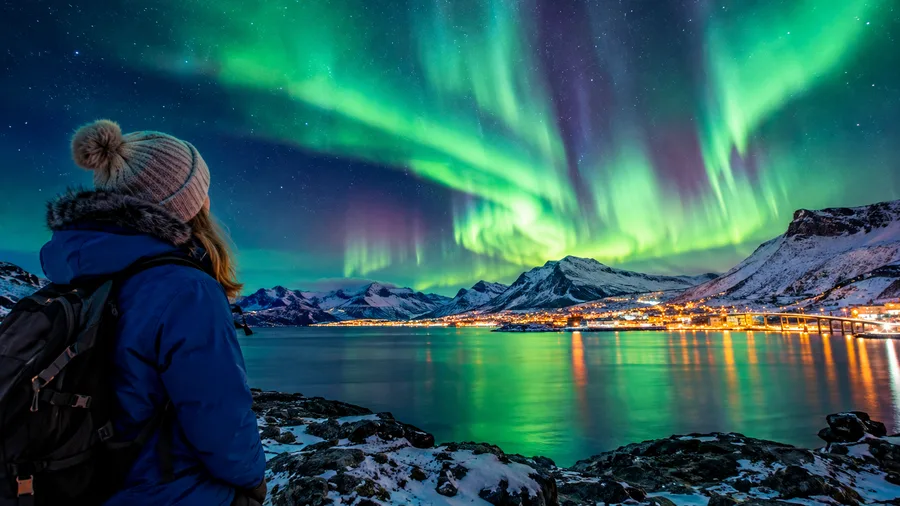
A lot of first-timers assume that as soon as the clock strikes midnight, the sky switches on. You can certainly see activity at midnight, but the window is much broader. So, when can you see the northern lights in norway on any given evening? The sweet spot generally falls between 18:00 and 02:00, with historical peaks hovering from 21:30 to 00:30.
Tromsø sits right beneath the auroral oval, at roughly 69 degrees north. Because of its location in the far north, strong displays can easily ignite at 17:00 during the dark days of December. You could be sitting in a downtown bistro eating reindeer stew and miss an entire display out the window before dessert arrives.
- Track the solar wind direction (Bz value): When the Bz needle points south, Earth's magnetic shield opens up to incoming particles, creating bright outbursts within thirty minutes.
- Watch cloud cover maps over raw aurora numbers: Clear skies beat a high Kp index every single time. A Kp 1 under clear stars yields a better show than a Kp 7 beneath heavy overcast.
- Check satellite radar loops at 17:00: Coastal cloud cover moves fast in northern Norway. Checking active radar shows you whether you need to drive east toward inland valleys like Skibotn or stay along coastal roads.
- Stay outside during the lull periods: Auroras come in waves. You might get fifteen minutes of blazing color followed by an hour of dull gray fog. Do not pack up early and head to your hotel.
Note: Phone apps that send alert notifications based strictly on the Kp index are frequently delayed by twenty to forty minutes. Look out the window and check live regional webcams rather than staring at an app screen.
Book your aurora borealis tour tromso experience:
Tromso Northern Lights Season: Balancing Aurora Hunts with Winter Daylight
Choosing when to visit norway for northern lights comes down to how you want to spend your daytime hours. If you visit between late November and mid-January, you will experience the Polar Night. There is no sunrise. In its place, you get three to four hours of eerie twilight, painted in pastel pink, lavender, and dusky blue across the fjords. It is stunning, but it can feel disorienting if you struggle with low energy in darkness.
Many travelers want the classic Scandinavian postcard trip: dog sledding through birch glades, running snowmobiles across mountain plateaus, and chasing auroras after dinner. If that matches your plan, avoid northern lights norway september and early autumn. Ground snow usually does not accumulate enough for winter sports until late December. Early autumn is strictly for hikers, road-trippers, and landscape photographers.
If you want both snow adventures and dark nights, plan your arrival between late January and late March. The sun climbs higher each week, snowpack reaches its deepest levels, and temperatures stay cold enough to keep trails firm. Choosing where to see northern lights in tromso becomes much easier in late winter because inland roads are plowed routinely, allowing easy access to deep wilderness spots away from street lighting.
Understanding Tromsø's unique position inside the Arctic Circle explains why the weather stays milder than Canadian or Siberian tundra at the same latitude. The Gulf Stream keeps the coastal harbors open all winter, which brings warmth but also sea moisture. Learning more about how tromso in the arctic circle operates geographically will help you pack the right gear and set realistic expectations for sudden coastal squalls.
Choosing Your Travel Strategy Based on Priorities
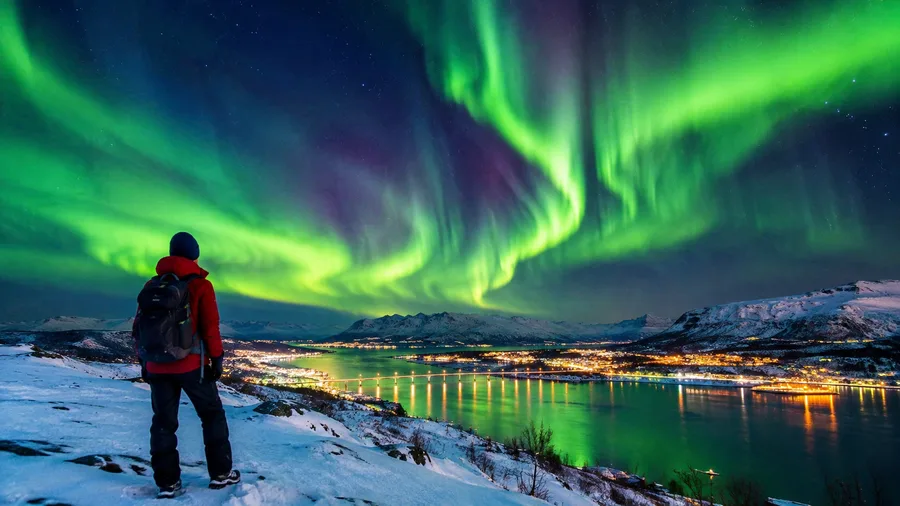
Your ideal travel dates depend entirely on what matters most to your travel group. Every window comes with a trade-off between daylight, temperature, and tour availability.
- Autumn enthusiasts (September to October): Best for travelers who dislike freezing cold. Roads remain clear of ice, rental cars are simple to drive, and fjords offer gorgeous mirrored reflections. Day tours focus on hiking and boat trips.
- Midwinter lovers (December to January): Best for those seeking the dramatic Polar Night ambiance and holiday cheer. Skjervøy whale watching trips run at their peak during this window, though coastal blizzards are common.
- Active winter adventurers (February to March): Best for combining dog sledding, snowshoeing, and aurora chasing. Daylight lasts long enough for genuine outdoor recreation before the night hunt starts, and weather inland tends to be remarkably stable.
Tour prices and accommodation peak violently around Christmas and New Year. If you visit during late December, expect to pay steep rates for hotels along the harbor, and book guided activities months in advance. Late January and early March often bring slightly lower lodging pressure, outside the specific week of European school holidays in mid-February.
Remember that a longer stay always improves your odds. Spending just two or three nights in Tromsø leaves you vulnerable to a single persistent storm system sitting over the coast. Five to seven nights gives you enough room to wait out bad fronts or book a long drive inland to find clear pockets near the Finnish border.
Frequently Asked Questions about best time to see northern lights in tromso
When can you see northern lights norway during the calendar year?
The lights become visible around late August and linger until mid-April. Outside this window, the midnight sun and bright summer skies completely drown out any solar activity, making auroras invisible from the ground.
Is September a good month for northern lights in Tromso?
Yes. Late September offers comfortable temperatures, no icy roads, and strong geomagnetic storms driven by the autumn equinox. You miss out on snow activities, but the water reflections in the fjords are incredible.
When are northern lights in Norway visible at night?
They can show up anytime after full dark, usually between 18:00 and 02:00. The statistical peak for active auroral substorms in Tromsø typically happens between 21:30 and midnight.
Will 2025 and 2026 be good years for Tromso auroras?
They will be outstanding. Solar Cycle 25 is hovering at its solar maximum during 2025 and 2026. This period brings frequent, powerful solar wind outbursts, triggering vivid auroras even during minor disturbances.
Quick Reference
- Peak Season: Late September through late March
- Best Weather Balance: February and March
- Reflections / Mild Weather: September and October
- Daily Peak Hours: 21:30 to 00:30
- Current Cycle: Solar Maximum through 2026
Book your aurora borealis tour tromso experience:
The Bottom Line
If I had to hand my best friend a plane ticket right now, I would tell them to land in Tromsø around the second week of March. You get the benefit of deep snow, daylight for dog sledding, warmer afternoon temperatures, and that sweet equinox geomagnetic boost under dark skies. But if you want to avoid driving on snow and ice, book late September without a second thought. Pick the window that fits your tolerance for cold and dark, give yourself at least five nights, and step outside whenever the stars show up.
Read more about aurora borealis tour tromso.